
Microlight » Gyroplane Technical Knowledge » Aerodynamics of Autorotation
Aerodynamics of Autorotation
How Do the Blades Autorotate?
In a gyroplane, the rotor blades are not powered by the engine during flight. Instead, airflow upwards through the rotor disc provides the energy required to overcome blade drag and maintain rotor rotation.
This process is known as autorotation.
Rotor Blade Aerofoils
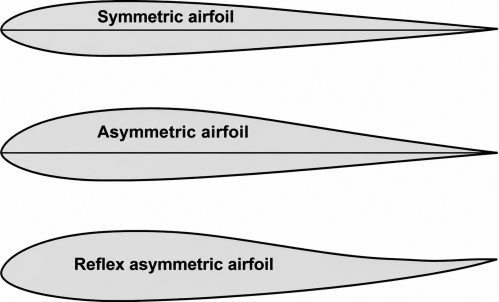
Gyroplane rotor blades commonly use asymmetric aerofoils, meaning the upper and lower surfaces have different shapes.
These aerofoils are designed to produce lift efficiently while minimising drag during autorotation.
Some rotor blades also have a reflexed trailing edge, where the rear portion of the aerofoil curves slightly upwards.
This upward curve helps reduce the aerofoil's natural nose-down pitching tendency, reducing the aerodynamic forces that try to twist the blade and improving its stability.
Fixed Pitch Rotor Blades
Most gyroplanes have fixed-pitch rotor blades, meaning the blade pitch angle is preset and cannot be changed by the pilot during flight.
The rotor blade pitch angle is the angle between the blade's chord line and the plane of rotation.
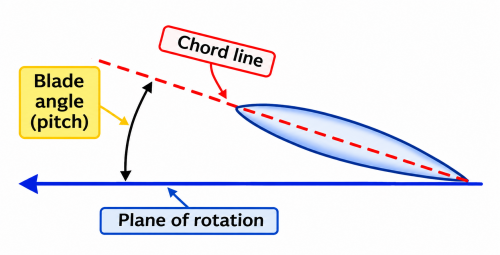
Unlike a helicopter, a conventional gyroplane does not have a collective pitch control to change the pitch of the rotor blades.